
FROM: Strategic Intelligence & Geopolitical Risk Desk
SUBJECT: Comprehensive Threat Matrix: Sahelian Power Shifts, Horn-Gulf Alliances, Global Chokepoint Pressures, and Strategic Recommendations for Nigeria
1. Executive Summary
West Africa and the Sahel are experiencing a rapid transformation, shifting from localized counter-insurgency operations into a broad arena of macro-geopolitical competition. Algeria’s military projection into Niger marks an abandonment of its traditional non-interventionist doctrine, aimed at countering mercenary influences, securing critical energy projects (Trans-Saharan Gas Pipeline), and establishing regional dominance. Concurrently, the Alliance of Sahel States (AES)—Mali, Burkina Faso, and Niger—is consolidating an anti-Western, pro-Russian axis that threatens to encircle coastal West Africa while fragmenting ECOWAS. These shifts intersect directly with foreign intervention patterns: the Turkey–Egypt axis aligning against UAE shadow influence across Sudan and the Horn of Africa, asymmetric diplomacy between Burkina Faso and Israel, and supply-chain pressures caused by global conflicts in Ukraine and the Strait of Hormuz. Nigeria faces an arc of instability that threatens its immediate borders, economic infrastructure, and regional leadership.
2. Key Geopolitical Vectors & Sahelian Dynamics
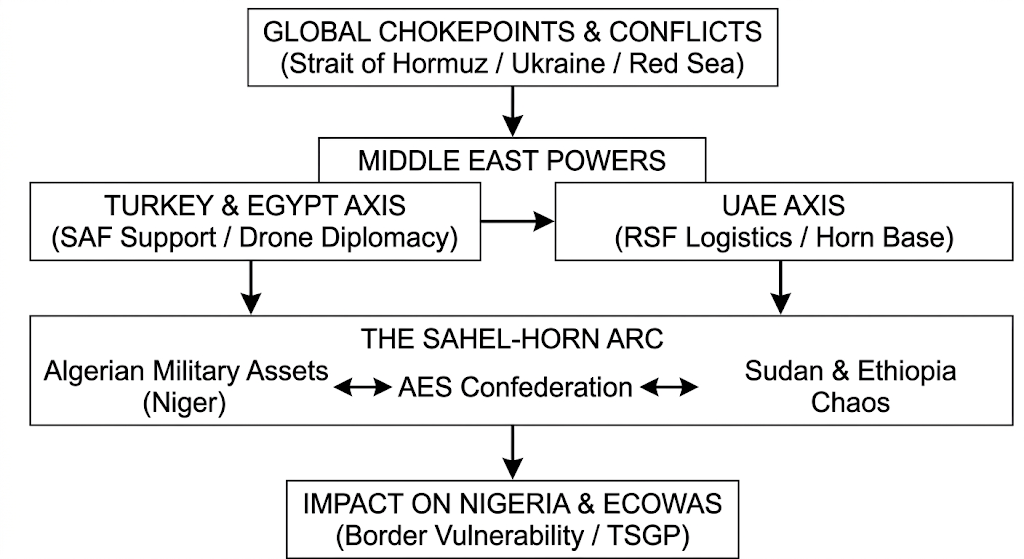
A. Algerian Military Projection in Niger & Border Dynamics
I. Doctrine Shift: Algeria’s deployment of air assets (including Su-30 jets) and intelligence support to Air Base 101 in Niamey and near the Libyan border represents a major shift toward proactive forward defense.
II. Strategic Motivation: Algeria seeks to counter Russian mercenary expansion near its southern border, neutralize transnational jihadist logistics routes (JNIM and ISGS), and secure the long-delayed Trans-Saharan Gas Pipeline (TSGP) project linking Nigeria through Niger to European energy markets.
III. Impact on Chad: Niger’s alignment with Algeria and Russia isolates Chad. Surrounded by destabilized zones—Sudan to the east, Libya to the north, and a suspicious AES bloc to the west—N'Djamena faces heightened internal coup vulnerabilities and cross-border rebel incursions.
B. Consolidation of the Alliance of Sahel States (AES)
I. The AES confederation (Mali, Burkina Faso, Niger) has created a sovereign military-political enclave outside ECOWAS structures.
II. Burkina Faso–Israel Realignment: Ouagadougou's pragmatic engagement with Israel reflects a desire to diversify surveillance and cyber-intelligence capabilities independent of both Western channels and Russian mercenaries.
III. While technical talks with ECOWAS persist out of economic necessity (trade and transit fees), the AES’s strategic center of gravity remains anchored to anti-Western, sovereign military governance.
3. The East Africa–Middle East Nexus: Sudan, Horn of Africa & Gulf Powers
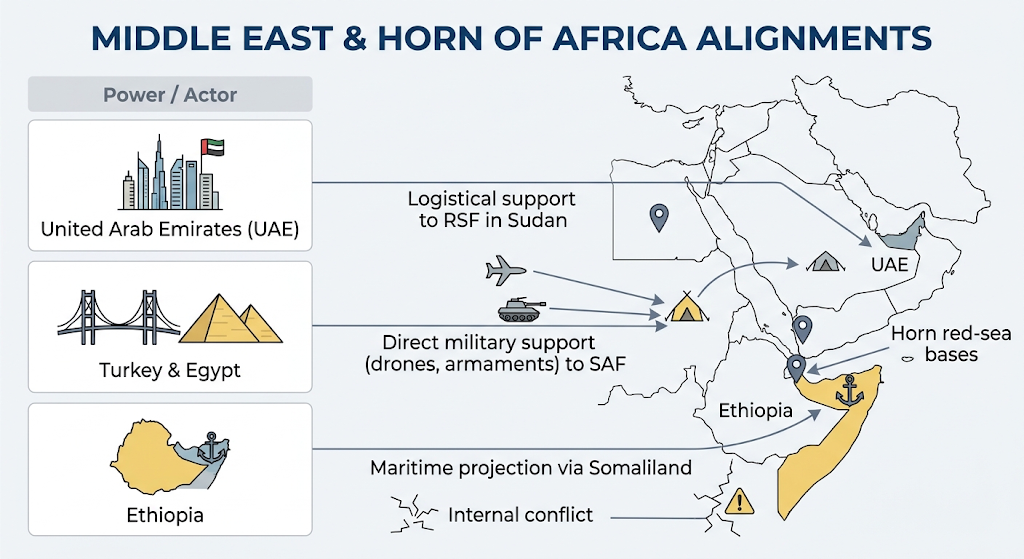
1. Sudan Conflict Expansion: The collapse of central authority in Sudan acts as a regional engine of instability. UAE logistical lines backing the Rapid Support Forces (RSF) flow across southern Libya and the Sahel corridor. In response, Turkey and Egypt have consolidated an alliance supporting the Sudanese Armed Forces (SAF) through drone transfers and intelligence sharing to contain UAE influence along the Red Sea and Nile Basin.
2. Ethiopia & Horn Instability: Ethiopia’s ongoing domestic insurgencies (Amhara/Oromo) and its quest for Red Sea access via Somaliland have drawn hostility from Somalia, Eritrea, and Egypt. This regional friction dilutes broader African Union focus on West African crisis management.
4. Macro Global Shocks: Ukraine, Hormuz, and Gulf Dynamics
I. Strait of Hormuz & Red Sea Chokepoint Volatility: Disruptions along major maritime routes have sent global oil prices into volatile cycles. While headline crude prices offer short-term revenue spikes for African exporters, severe refining deficits translate into domestic fuel inflation, transport paralysis, and fiscal strain.
II. Ukraine War Spillover: The ongoing war in Ukraine continues to drive mercenary activity across the Sahel, as competing intelligence networks exploit local rebellions to wage proxy warfare on African soil.
III. Gulf Financial & Diplomatic Leverage: Gulf states are actively leveraging sovereign wealth investments across African port infrastructure, mining, and agriculture to secure diplomatic alignment, complicating traditional regional integration efforts.
5. Strategic Threat Matrix for Nigeria
| Operational Domain | Risk Description | Strategic Consequence |
|---|---|---|
| Northern Border Security | Northern border states (Sokoto, Katsina, Zamfara, Borno) face spillover from JNIM, ISWAP, and weapons trafficking. | Heightened risk of coordinated insurgent attacks on border communities and transit corridors. |
| Trans-Saharan Infrastructure | Algeria's presence in Niger offers security to TSGP, but creates strategic dependencies on Algerian and Nigerien goodwill. | High exposure to geopolitical blackmail or kinetic disruptions along the pipeline route. |
| Regional Leadership Erosion | ECOWAS cohesion remains fractured despite tentative talks with the AES bloc. | Reduced capacity for collective security responses across West Africa. |
| Macroeconomic Shocks | Global fuel supply disruptions create high domestic refined-fuel import costs despite high crude prices. | Increased domestic inflationary pressures and fiscal vulnerability. |
6. Actionable Policy Recommendations for Nigeria
1. Establish a High-Level Bilateral Security Dialogue with Algeria
A. Initiate direct, confidential military-to-military communications with Algiers regarding their presence at Air Base 101 in Niger.
B. Coordinate joint intelligence-sharing mechanisms along the Niger–Nigeria border to ensure Algerian operations complement Nigerian counter-insurgency efforts against ISWAP/Lake Chad threats.
2. Pivotal Pivot on AES Engagement
A. Shift from coercive ECOWAS diplomatic postures to pragmatically negotiating economic and intelligence access agreements with the AES bloc.
B. Formalize a bilateral Nigeria–Niger Border Security Pact independent of broader ECOWAS political standoffs to protect trade and infrastructure corridors.
3. Inland Infrastructure & Refining Security Priority
A. Accelerate domestic refining operations (Dangote Refinery and state-owned refineries) to insulate Nigeria from global refined-product supply shocks driven by the Strait of Hormuz crisis.
B. Deploy dedicated Joint Task Forces to guard critical national gas infrastructure and the entry points of the TSGP.
4. Strategic Hedging in Gulf & Middle Eastern Relations
A. Maintain a neutral, pragmatic stance between the Turkey-Egypt axis and UAE interests.
B. Require foreign investments in defense or critical infrastructure to undergo national security reviews to prevent proxy conflict dynamics from embedding within Nigerian domestic security sectors.